What Is Moissanite?
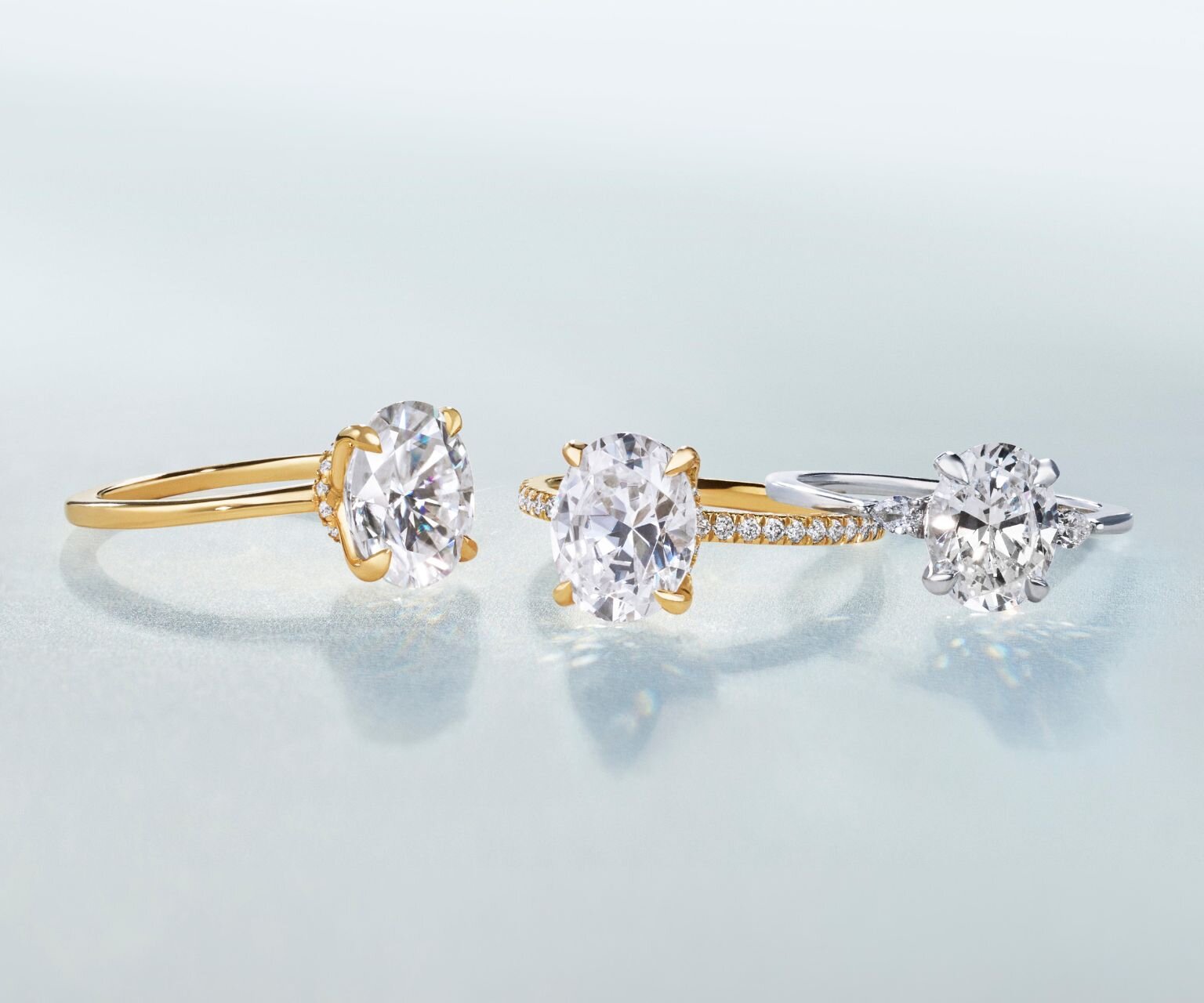
Moissanite is a mineral composed of silicon carbide. Often referred to as the gemstone from the stars, it was discovered in 1893 inside of a meteorite in Canyon Diablo, Arizona, by Nobel Prize-winning chemist Henri Moissan.
Today, moissanite is exclusively grown in laboratories as an alternative to diamonds. Created in a controlled environment with advanced technology, it is easily traceable and requires no mining.
Increasingly popular as an alternative to diamonds, moissanite is now widely used in jewelry, especially as the center stone of engagement rings.
Is a Moissanite a Diamond?
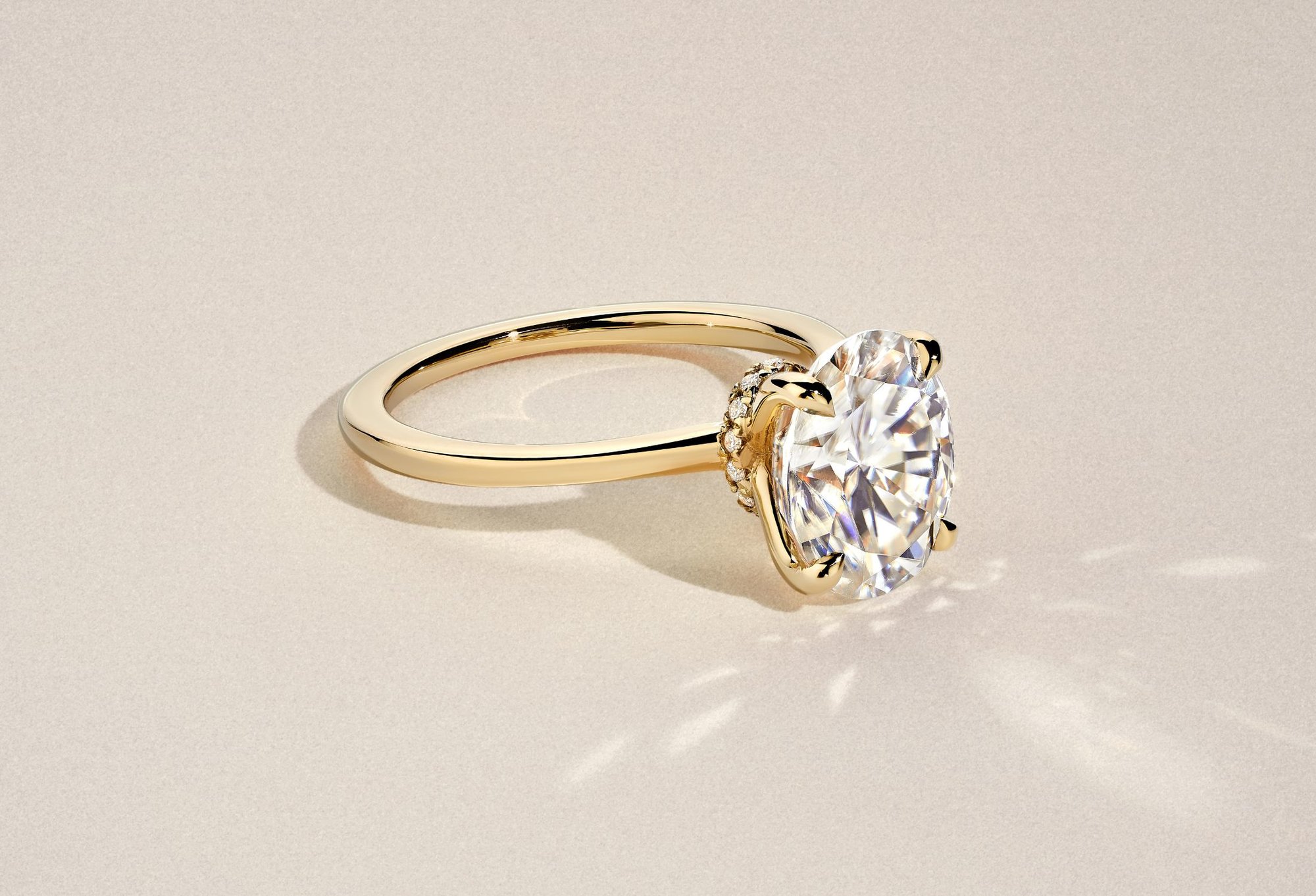
No, a moissanite is not a diamond. Professionals grow them in laboratories because they are visually similar to diamonds, but compositionally they are quite different. Diamonds are composed of carbon and moissanites are composed of silicon carbide.
While the untrained eye may visually perceive a moissanite as similar to a diamond, it has a higher refractive index and produces more rainbow fire when light hits the stone’s surface. Diamond is also physically harder than moissanite, which is a 9.25 on the Mohs hardness scale compared to a diamond’s rating of 10.
Moissanite vs. Diamond vs. Lab Diamond
| Moissanite | Diamond | Lab Diamond | |
|---|---|---|---|
| Durability | Moissanites are 9.25 on the Mohs scale, making them suitable for everyday wear. | Diamonds are a 10 on the Mohs scale, making them an ideal option for engagement rings. | Lab diamonds are a 10 on the Mohs scale, making them an ideal option for engagement rings. |
| Brilliance | Moissanites are slightly more brilliant than diamonds and feature more than twice the amount of fire. | Natural diamonds are slightly less brilliant than moissanite and still exhibit dispersion and scintillation. | Lab diamonds have the same optical characteristics as natural diamonds and feature two times less fire than moissanite. |
| Price | Moissanite is dramatically lower in price than diamonds of the same carat weight. | Natural diamonds are the most expensive because they are rare and take billions of years to form. | Lab diamonds cost less than their natural counterparts but more than moissanite. |
| Sourcing | Moissanite is grown in a controlled laboratory, then cut and polished. | Natural diamonds form deep in the Earth, then are mined, cut, and polished. | Lab diamonds are grown in a controlled laboratory, then cut and polished. |
How to Tell a Moissanite From a Diamond
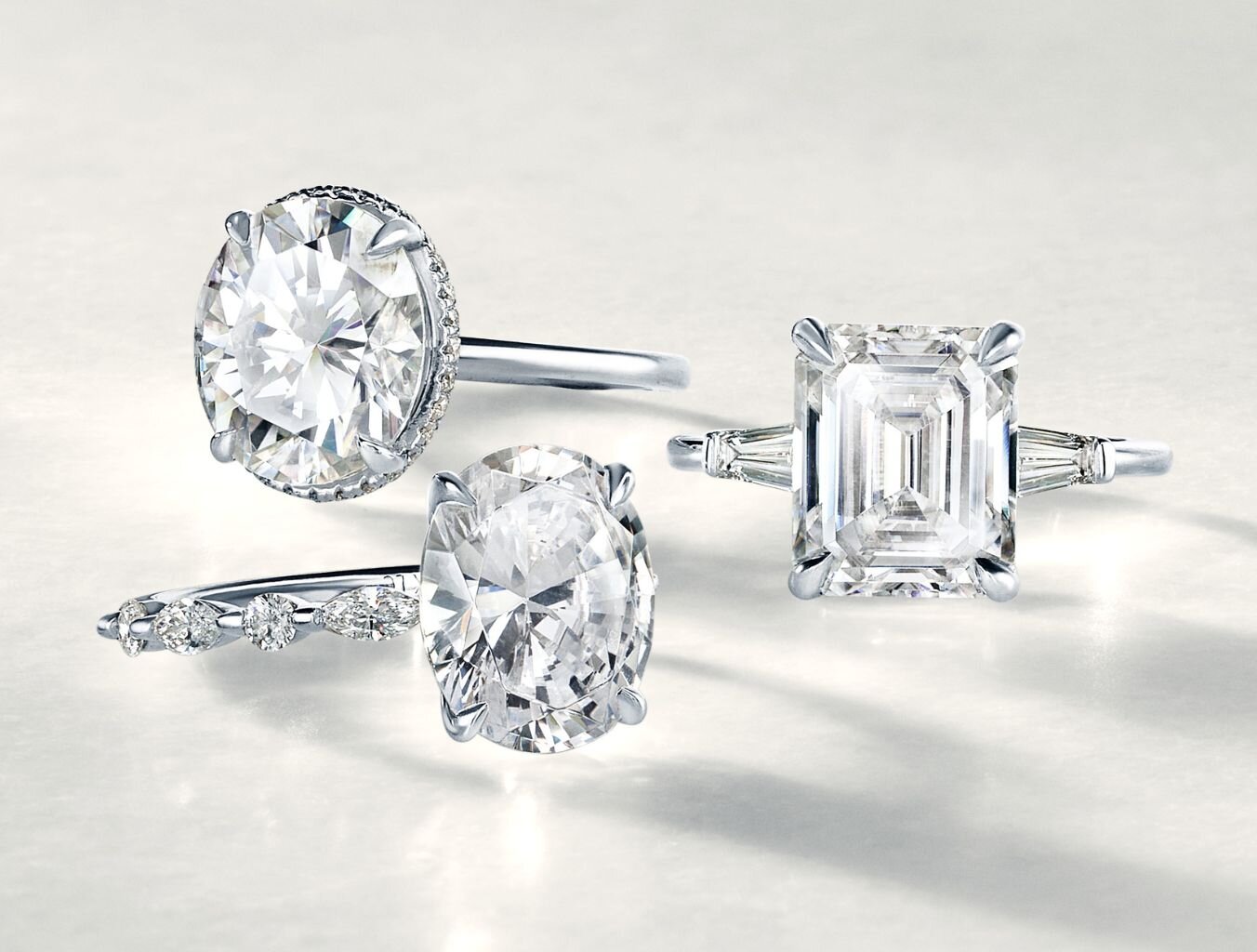
If you are not trained in the differences between diamond and moissanite, telling the difference can be difficult. The best way to tell the difference is to line up two similarly sized gemstones and compare them next to one another.
The distinct sparkle of a diamond is a combination of reflected light, color refraction, and scintillation. Moissanite exhibits those qualities too, but it also features more than two times the amount of fire than diamonds. To officially confirm the difference, take the stone to a trained professional.
Benefits of Moissanite
Mining Free
Moissanite is lab created with minimal environmental impact.
Value
Moissanite is less expensive per carat than many other gemstones.
Durability
Moissanite is a 9.25 on the Mohs scale, so it is suitable for everyday wear.
Tips on Selecting a Moissanite
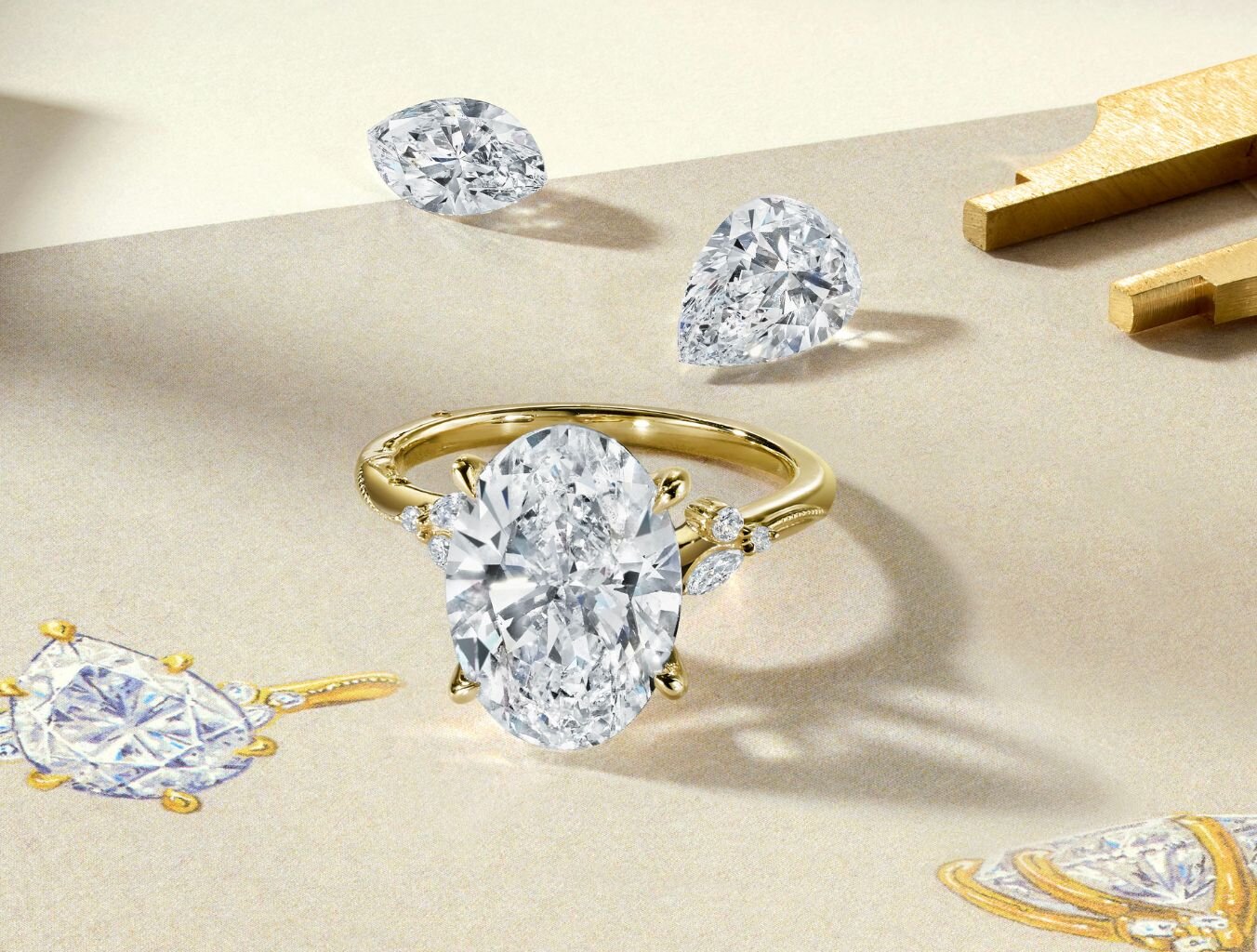
Unlike diamonds that are graded by independent institutions on cut, color, clarity, and carat, moissanites are reviewed for cut, color, and clarity. They are then categorized by color and rated as Premium or Super Premium.
It is most important to consider whether moissanite is the right gemstone for you. Think about its difference from diamonds, including its fire, scintillation, price, and durability, to determine if it is your ideal fit.
Moissanite vs. Diamond: What's the Difference? FAQ
Does moissanite get cloudy?
No, moissanite does not get cloudy over time. With proper care, it can remain bright throughout your lifetime.
How is moissanite made?
Moissanite is grown in a laboratory by professionals with advanced, specialized equipment.
How long does moissanite last?
Moissanites are strong, long-lasting gemstones. With proper care, they can last throughout your lifetime and be passed down to future generations.
Is moissanite a precious stone?
No. Moissanite is not a precious stone; the precious stones are diamonds, rubies, sapphires, and emeralds.
How can you tell moissanite from cubic zirconia?
To the untrained eye it can be difficult, so we recommend bringing the stone to a trained professional who can validate exactly what it is.